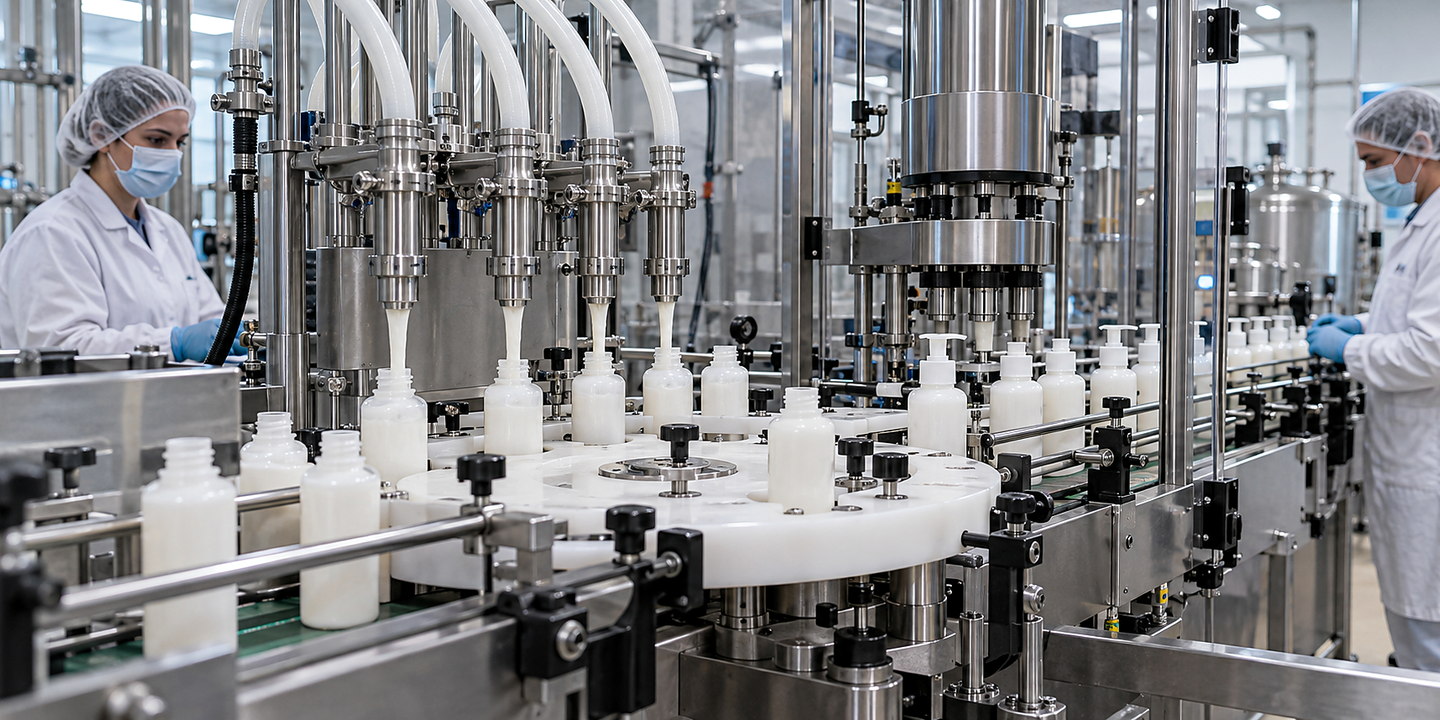
Perfume filling applications: plan the bottle and closure together
Plan perfume filling for shaped or narrow-neck bottles and pump or cap assemblies. Review quantity, visible level, decoration protection and fragrance changes.
In brief
Perfume filling applications differ with bottle shape and decoration, neck access, fill quantity, pump or cap geometry and fragrance changes. Trial the actual filled and closed pack, retaining separate evidence for quantity, appearance and closure condition.
Match the solution to your product, part and operating needs — Perfume Filling Machines
Plan perfume filling machines around your product, pack range, target output, cleaning needs and finished-pack checks. Discuss a practical line concept with Lancing using representative samples. Use the application examples to compare routine production using perfume filling and closure handling with short runs and format changes involving perfume filling and closure handling.
Routine Production Using Perfume Filling and Closure Handling
For routine perfume production, identify the fragrance, bottle and neck-finish range, required fill quantity and complete pump or cap assembly. Agree how filled and closed bottles will be checked under the proposed production conditions.
Short Runs and Format Changes Involving Perfume Filling and Closure Handling
For short perfume runs and format changes, list the fragrance and bottle variants, fill quantities and complete closure assemblies. Compare change-parts, retained product, cleaning and first-off approval alongside the required pattern of accepted production.
A perfume project may combine a narrow bottle opening, decorated glass and a pump or other closure. Review the actual bottle, closure components and filling liquid as one pack. A filler that delivers the dose does not by itself establish that the bottle can be handled and closed without damage.
Decorated and shaped bottles
Identify the surfaces that must not be gripped or rubbed. Assess support through nozzle entry, filling, transfer and closing, including offset necks or narrow bases. Record any marks on a finished sample under the agreed inspection conditions rather than checking only an undecorated trial bottle.
Fill level and quantity
A consistent visual level and a consistent quantity are different requirements when bottle internal volume varies. State which dosing or level-control approach is proposed and how the declared quantity is checked. Compare the appearance after closure components have been fitted, including any displacement caused by a dip tube.
Pump and closure assemblies
List the exact neck finish and closure components. Where crimping is required, obtain the approved component geometry and acceptance method; where the closure screws on, define the applicable closing and removal checks. Do not assume that pumps with a similar external appearance share the same mounting requirements.
Frequent fragrance changes
Review retained product in hoses, valves and nozzles, the agreed emptying and cleaning sequence and first-off checks for the next fragrance. Count changeover loss and acceptable completed packs alongside the filling cycle when comparing a compact station with an automatic arrangement.
Resolve substance and production-area requirements early
Provide the actual product safety information and planned handling conditions. Flammable-liquid and vapour risks require an application-specific assessment; the word perfume is not a sufficient equipment classification. HSE's DSEAR guidance explains the assessment framework. No hazardous-area approval is implied for equipment discussed on this page.