Understand your requirement
Review the fragrance, bottle and neck-finish drawings, required fill quantity and complete pump or cap assembly using identified samples and production observations.
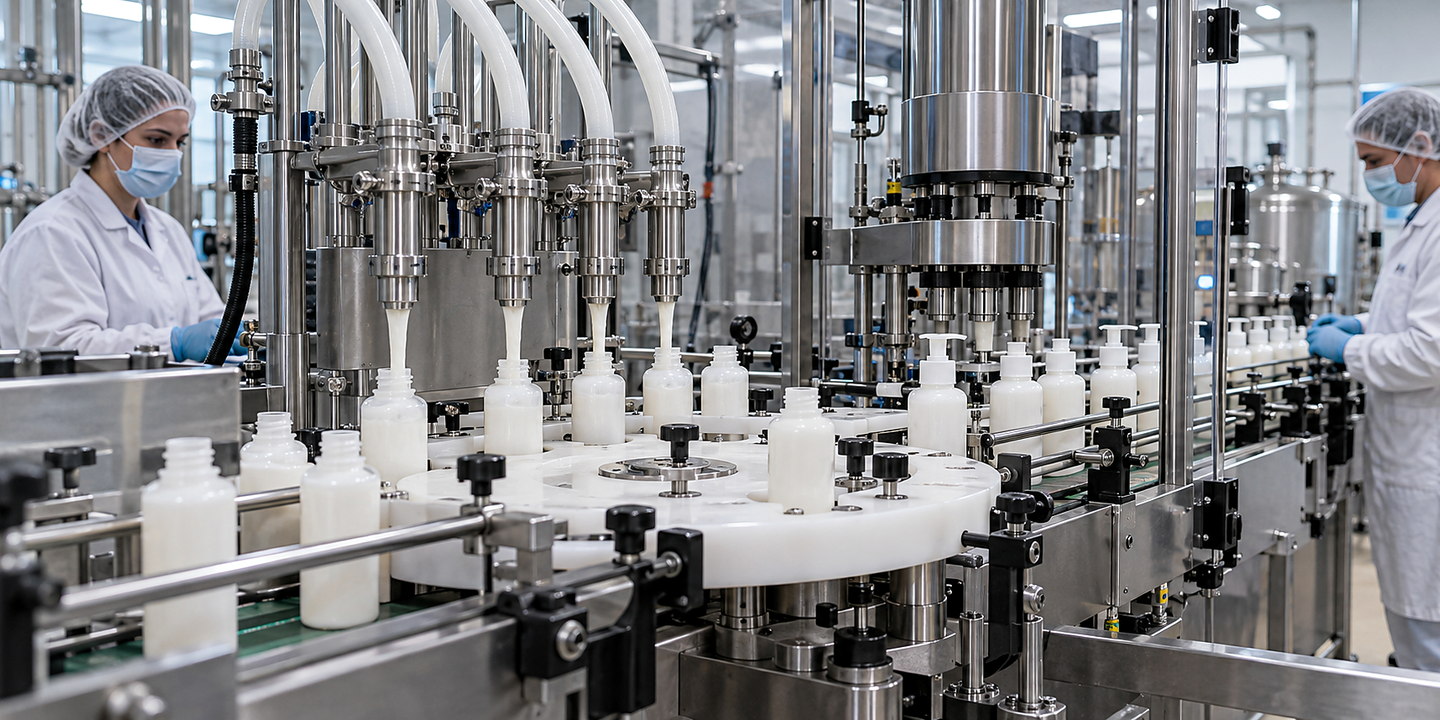
Compare perfume filling options using the actual fragrance, bottle and pump or cap. Review dose, visible level, closing, changeover, exceptions and accepted output.
Compare perfume filling options using the same fragrance, production bottles and complete pump or closure assembly. Assess dose and visible level separately, then compare bottle support, nozzle access, closing, cleaning and accepted output for the actual batch pattern.
Use the supplier comparison questions and bottle and pump checklist to define a trial. Product safety information, contact materials and any hazardous-area requirements need application-specific review; no standard equipment approval is implied.
Plan perfume filling machines around your product, pack range, target output, cleaning needs and finished-pack checks. Discuss a practical line concept with Lancing using representative samples. When you compare solutions, check how each option handles the fragrance, bottle geometry, complete closure assembly and agreed boundary with the surrounding line.
Discuss your application

Review the fragrance, bottle and neck-finish drawings, required fill quantity and complete pump or cap assembly using identified samples and production observations.
Run focused trials for perfume filling machines so you can see why an option is recommended or ruled out.
Resolve required output and production pattern, cleaning, access and changeover method, controls, safety, operator access and maintenance before site work.
Agree the finished-bottle checks and how packs outside the agreed limits will be identified and handled in normal, difficult and fault conditions, then agree training and support for your team.
Typical support: line concept, trials, filling or packaging equipment, integration and handover.
| Approach | Often suitable when | Watch for |
|---|---|---|
| Focused filling and closing trial | The identified perfume, bottle and closure range can be compared in a bounded trial. | Check dose, visible level, nozzle access, transfer and closure condition together; retain excluded formats. |
| Semi-automatic operation | Smaller batches, frequent fragrance changes or manual presentation may justify operator involvement. | Assess actual handling, replenishment, quantity checks, cleaning and format changes; do not infer an accepted rate from a dosing cycle. |
| Automatic line integration | Repeatable bottle flow and the batch pattern justify connected filling and closing. | Review infeed, bottle support, controls, component supply, exceptions, operator access and changeover as a complete sequence. |