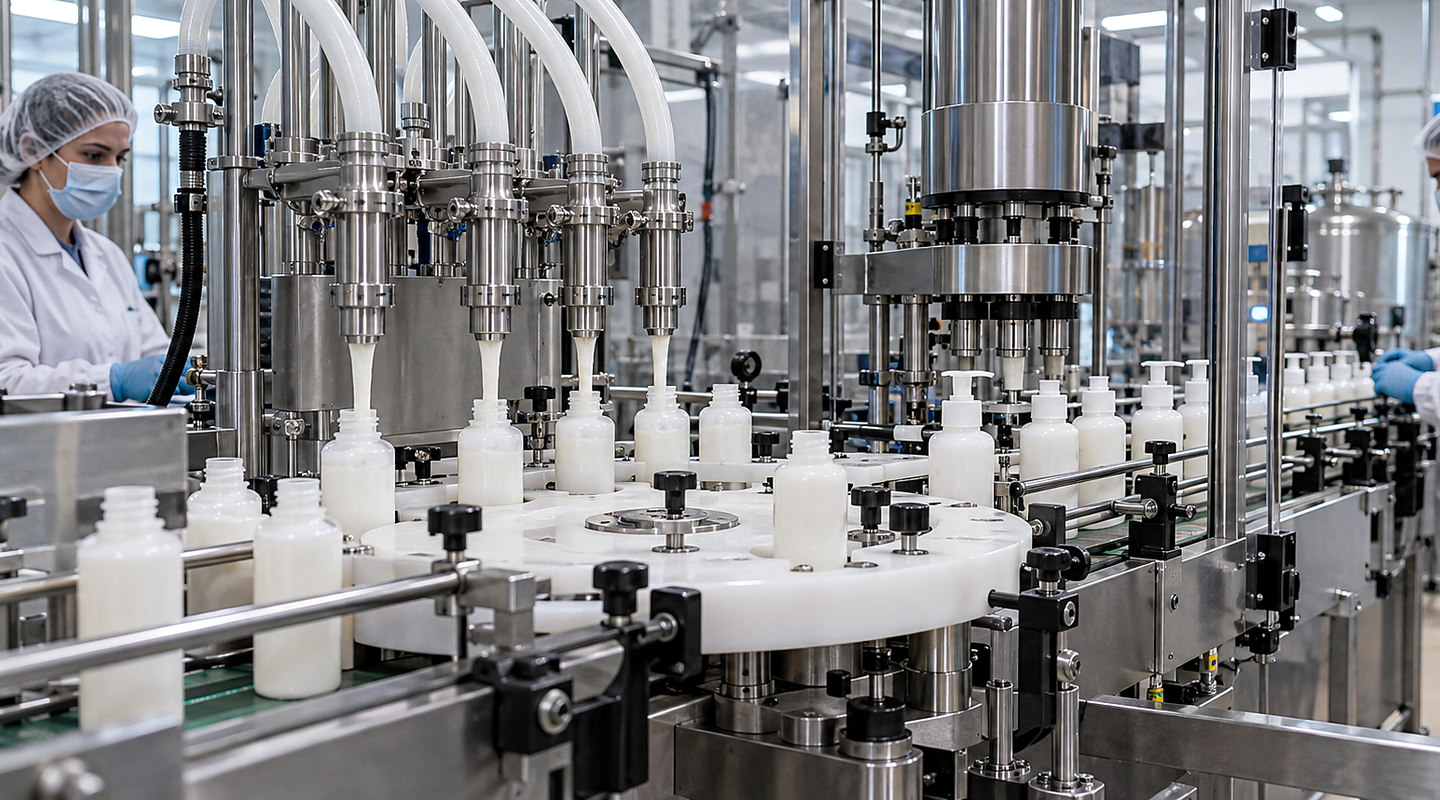
Perfume Filling Machines Selection Guide
Compare perfume filling systems with sample-specific questions on fragrance, bottles, dose, visible level, pump or cap fit, changeover and accepted production.
Compare proposed perfume filling systems against the same identified fragrance, bottle range, fill requirement and closure assembly. Ask for sample-specific trial evidence, clear exclusions and responsibility for bottle handling, closing, changeover and finished-pack decisions.
Record unanswered questions before shortlisting. Send the bottle and pump specification checklist with the enquiry and use the process sequence to check the boundary between the filler and the surrounding line.
Compare options in the conditions where they must work — Perfume Filling Machines
Plan perfume filling machines around your product, pack range, target output, cleaning needs and finished-pack checks. Discuss a practical line concept with Lancing using representative samples. A useful shortlist should show how every option copes with perfume filling & closure handling product behaviour and cleaning, access and changeover method.
Discuss your application
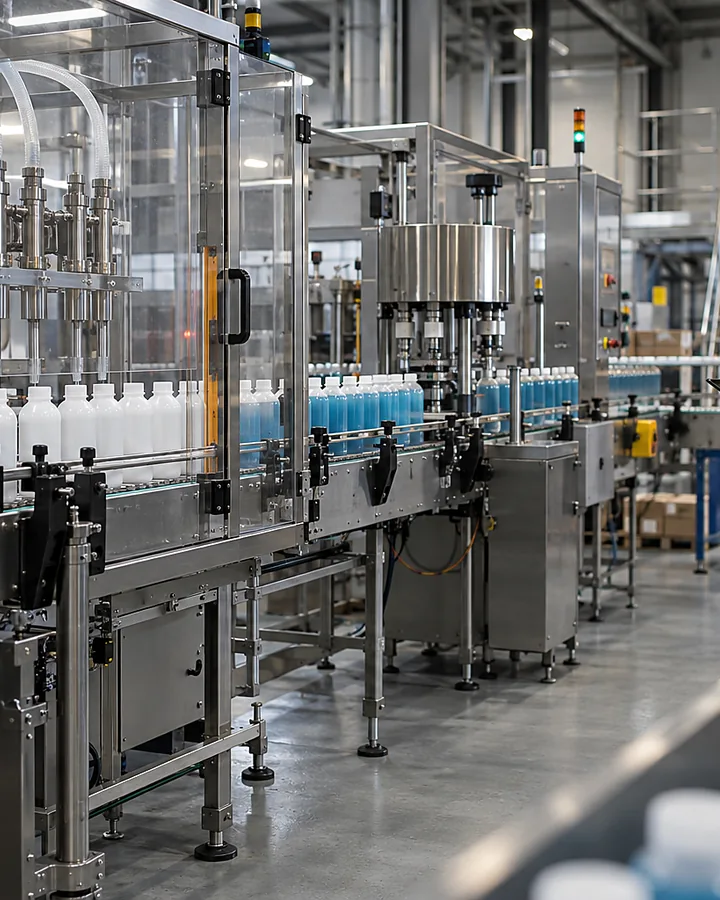
Ask every supplier the same questions
| Decision | What to ask | What to check |
|---|---|---|
| Fragrance and filling conditions | Which identified formulations, filling temperatures and normal variation were represented, and what safety and contact-material information is still needed? | Product references, stated trial conditions, supplier information and unresolved compatibility or site-assessment questions. |
| Bottle, neck and protected surfaces | How are shaped, narrow-neck or decorated bottles supported through nozzle entry, transfer and closing? | Production drawings and samples, support arrangements, supplier variation and agreed surface-condition observations. |
| Quantity and visible level | Is the requirement a measured quantity, a visual level or both, and how is each checked after relevant closure components are fitted? | Individual results and the agreed checking method; keep quantity acceptance separate from appearance. |
| Pump or closure interfaces | Which neck finish, pump, dip tube, collar, insert, crimp or cap references apply, and who defines the closing acceptance method? | Approved component references, demonstrated setup and finished-pack checks; do not assume similar-looking pumps are interchangeable. |
| Fragrance and format changeover | What product remains in the contact path, how is the next run released, and which parts or settings change? | Agreed recovery or cleaning boundary, change parts, settings, retained observations and first-pack release. |
| Accepted output and exceptions | What accepted completed-bottle count is demonstrated with normal replenishment, interruptions and pack checks? | Observed run conditions, accepted and held/rejected quantities, recovery responsibilities and exclusions. |
Include simpler approaches to perfume filling and closure handling in your shortlist
| Approach | Often suitable when | Watch for |
|---|---|---|
| Focused filling and closing trial | The identified perfume, bottle and closure range can be compared in a bounded trial. | Check dose, visible level, nozzle access, transfer and closure condition together; retain excluded formats. |
| Semi-automatic operation | Smaller batches, frequent fragrance changes or manual presentation may justify operator involvement. | Assess actual handling, replenishment, quantity checks, cleaning and format changes; do not infer an accepted rate from a dosing cycle. |
| Automatic line integration | Repeatable bottle flow and the batch pattern justify connected filling and closing. | Review infeed, bottle support, controls, component supply, exceptions, operator access and changeover as a complete sequence. |
Pause before choosing when…
- Only perfect or hand-selected examples of routine production using perfume filling and closure handling are available.
- No one has defined how finished-pack checks and reject handling will be evaluated.
- The normal range for perfume filling & closure handling product behaviour is described only as “usually fine” but has not been bounded.
- Your operator, cleaning, maintenance or recovery access has not been considered.
- Quoted performance depends on another machine or data source that is not included.